Five checks before the nozzle moves
1 Wash the plate
Hot water and plain dish soap. Finger oil on a textured plate kills adhesion, so the part will not stick and can let go mid-print. Alcohol smears that oil around instead of lifting it.
2 Hold the plate by the edges
After the wash, keep your hands off the surface. A new fingerprint puts the oil back before the first layer.
3 Uncross the spool
A crossed loop jams the feed before the first layer finishes. Clip the end until you actually load it, and make sure the path to the nozzle is not bent.
4 Dry what actually needs it
PETG, TPU, silk, and wood filament pick up water and start stringing. Basic PLA can usually go on straight from a fresh bag. If a tiny test print hairs up, dry that spool before the real job.
5 Do not scale it to fit
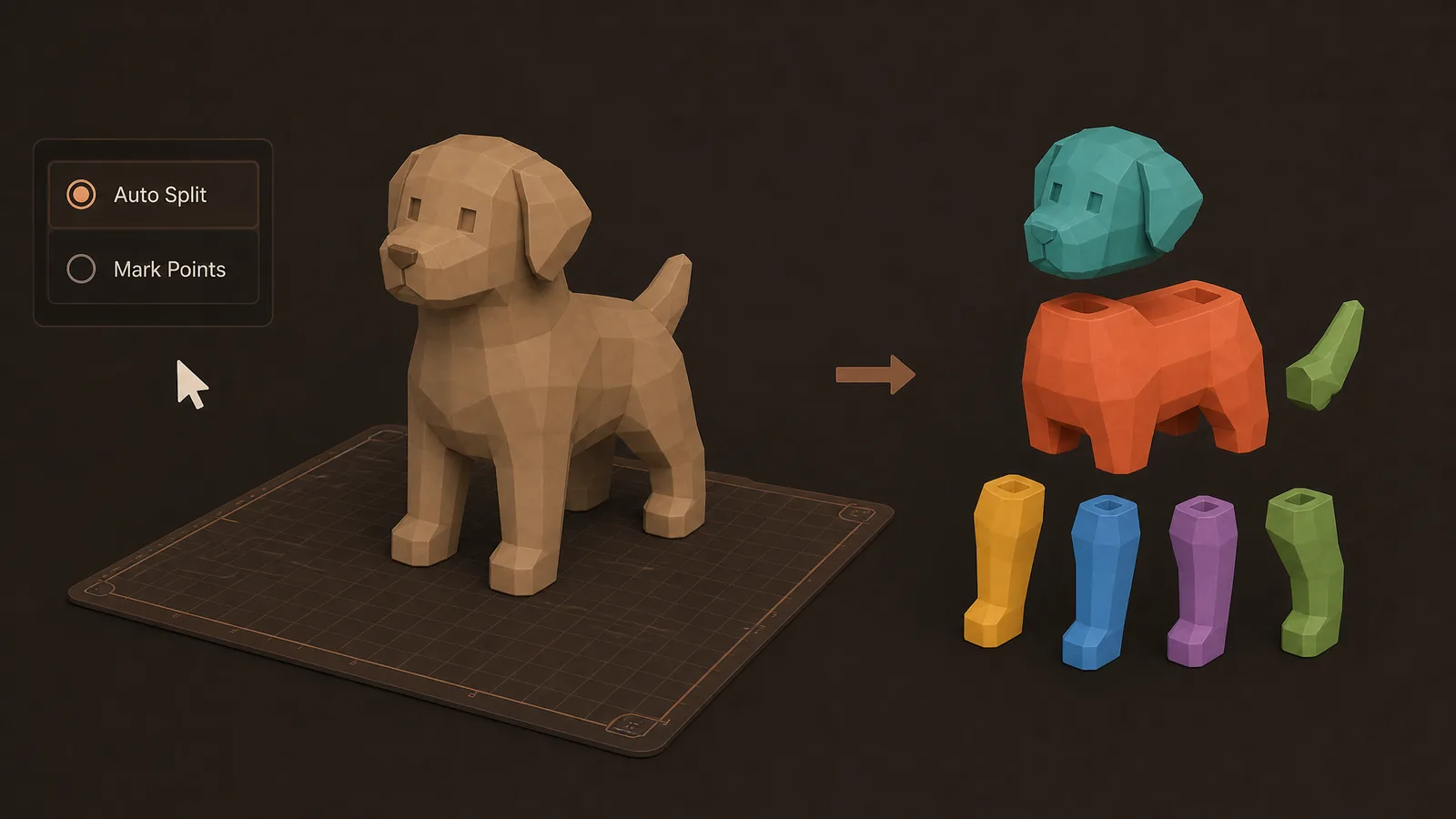
If the model is bigger than the plate, split it. Scaling changes every feature. Obloid’s AI part splitter breaks it into pieces that fit the bed at the size you wanted.
FAQ
What should I check before I hit print?
The plate, your hands, the spool, and the filament. A dirty plate, a crossed loop, or a wet spool can fail the print in the first minute. None of those are a slicer setting.
Which filaments need drying?
PETG, TPU, silk, and wood pick up water and string. Basic PLA can usually go on straight from a fresh bag. If a tiny test print hairs up, dry that spool before the real job.
Why clip the filament end?
A loose end can cross itself on the spool. That loop jams the feed before the first layer finishes. Clip it until you load the printer, and keep the path to the nozzle straight.
The model is bigger than the plate. Do I scale it?
No. Split it and keep the size. Scaling shrinks every feature, including the ones that were already right. The AI part splitter breaks one model into pieces that fit.
Full transcript
A print that comes off in the first minute was already decided. Dirty plate, a tangled spool, or wet filament. Five checks before the nozzle moves. Wash the plate with hot water and plain dish soap. Finger oil on a textured plate kills adhesion, so the part will not stick and can let go mid-print. Alcohol smears that oil around. Then keep your hands off the surface. Hold the plate by the edges. Look at the spool. A crossed loop jams the feed before the first layer finishes. Clip the end until you actually load it, and make sure the path to the nozzle is not bent. Dry what actually needs it. PETG, TPU, silk, and wood filament pick up water and start stringing. Basic PLA can usually go on straight from a fresh bag. If a tiny test print hairs up, dry that spool before the real job. If the model is bigger than the plate, do not scale it. Obloid's AI part splitter breaks it into pieces that fit.
 Stop touching your build plate
 Never print ABS or ASA on an open printer
 Why holes print undersized
 If walls feel weak, don't add more infill
 The STL looked fine until you sliced it
 5 mistakes every 3D printing beginner makes