
How to decide if this print actually needs a brim
1 A default brim on a wide base scars the part
The print already has a wide flat bottom. The slicer still wraps a brim around the first layer, an extra ring of plastic. The brim melts onto the side. When you peel it, leftover plastic stays stuck on the part.
2 Brim is for a tall part with a small base
Prusa says use a brim when the part is tall and the footprint is small. That is the nozzle-knock-over case. A wide PLA part already has enough plastic on the plate.
3 ABS gets a wider brim because it shrinks
Bambu makes the brim wider on ABS. Corners pull up. PLA on a wide base is not that job. Do not copy the ABS brim onto every PLA print.
4 A skirt is not a brim
A skirt is a loop that does not touch the part. It gets plastic flowing through the nozzle. Use it when you only need a prime. It will not weld a ring onto the side.
5 Leave a small gap so it peels
When you do brim — tall skinny, ABS corners, or a mini on two tiny feet — leave a small gap between the brim and the part. A smaller gap sticks harder. A bigger gap peels easier.
FAQ
Does a wide PLA part ever need a brim?
No. A wide PLA part already has enough plastic touching the plate. The extra ring melts onto the side and leaves leftover plastic when you peel it. Skip the brim.
What is the difference between a brim and a skirt?
A brim is an extra ring that touches the first layer. A skirt is a loop that does not touch the part. The skirt only primes the nozzle. The brim is the one that scars the side.
Why is the brim wider on ABS?
ABS shrinks. Corners pull up. Bambu makes the brim wider on ABS for that. PLA on a wide base does not shrink the same way. Do not copy that wider brim onto every PLA print.
When should I actually turn brim on?
A tall skinny part the nozzle can knock over. ABS because the corners pull up. A mini action figure standing on two tiny feet. Then leave a small gap so the brim peels instead of welding on.
Full transcript
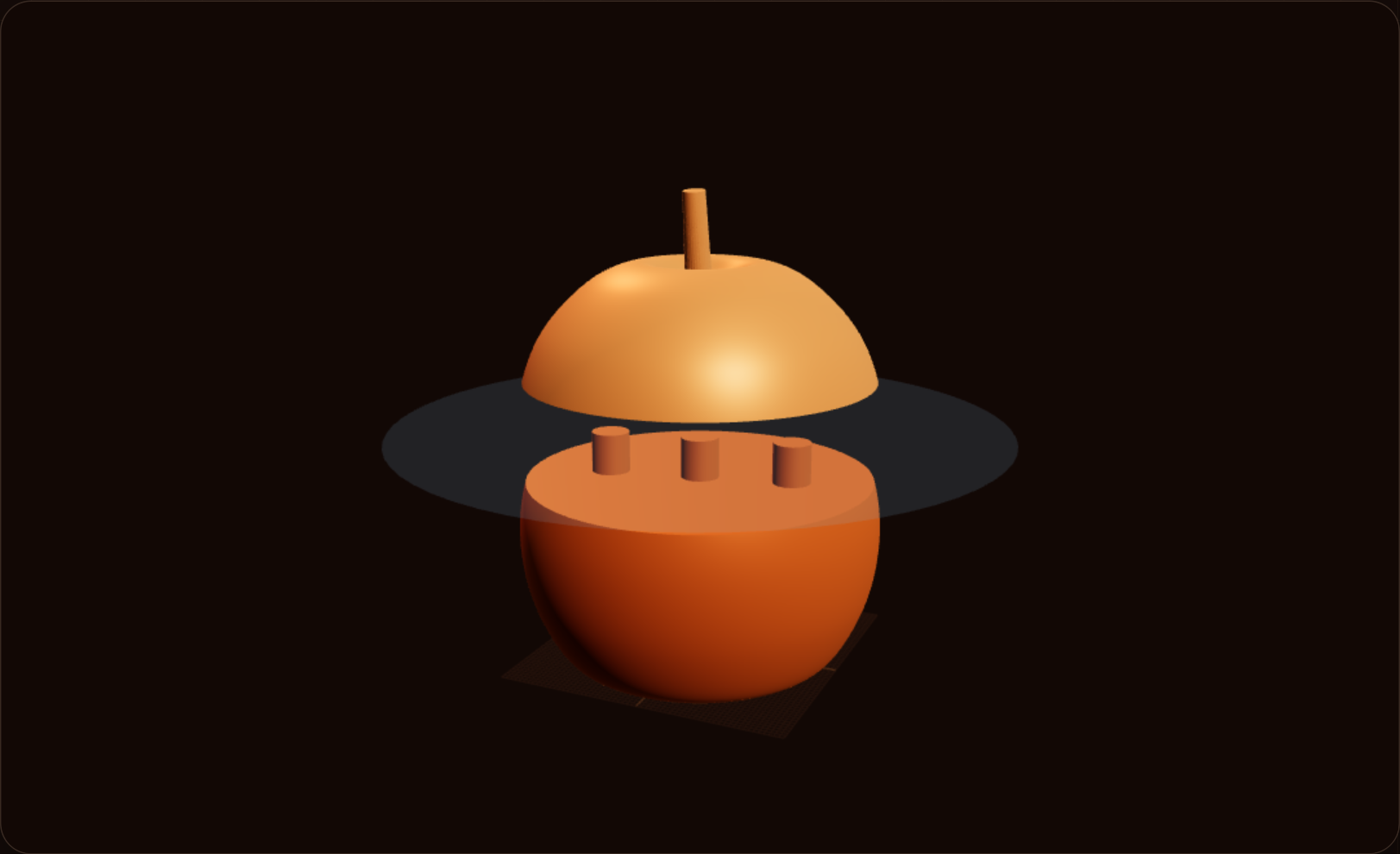
The print already has a wide flat bottom. The slicer still wraps a brim around the first layer, an extra ring of plastic. The brim melts onto the side, so when you peel it, leftover plastic stays stuck on the part. Prusa says use a brim for a tall part with a small base. Bambu makes it wider on ABS, because ABS shrinks. A wide PLA part has enough plastic touching the plate, so it sticks without a brim. A skirt is a loop that does not touch the part. It gets plastic flowing through the nozzle. Here's the fix. Use a brim on a tall skinny part that the nozzle can knock over, on ABS because the corners pull up, or on a mini action figure standing on two tiny feet. Leave a small gap between the brim and the part so it peels off. Use Obloid's free STL cutter to manually split the model into multiple parts.
 If it smells burnt, drop the nozzle temp
 Don't print PETG on smooth PEI
 Your outdoor print will die from the heat
 Don't use PLA for useful prints
 Wrong build plate selected = instant fail
 Stop using a metal scraper on your PEI plate